See more Toronto Sun on Google — save as a Preferred Source
OTTAWA — Last week’s federal budget has made permanent a rural immigration program meant to help struggling employers hire foreign workers.
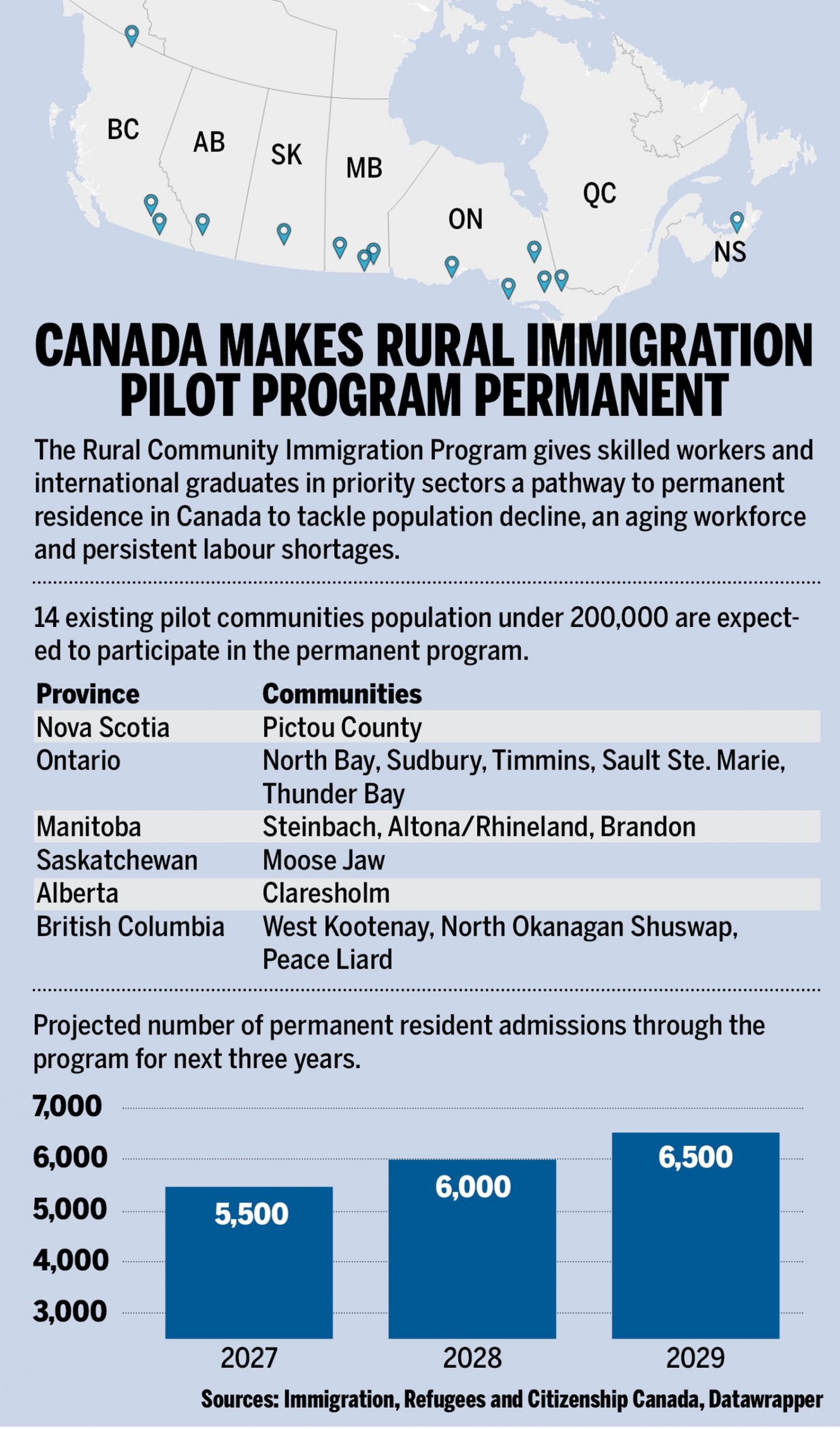
Making the announcement Monday in Pictou County, N.S., Immigration Minister Lena Metlege Diab said the Rural Community Immigration Pilot would be made into a permanent program.
“We appreciate that a one-size-fits-all approach to immigration doesn’t work for rural Canada, and this permanent pathway is one part of our work to ensure that communities of all sizes can share in the benefits of responsible, sustainable immigration,” she said in a statement.
Diab said the federal government understands the important role rural communities play in Canada’s economy, and the very real challenges employers in these areas face in seeking workers.
“That’s why we’re transitioning our successful rural immigration pilot into a permanent program — helping smaller communities attract and retain essential workers who deliver services and drive economic growth,” she said.
Regulations to create this new immigration class took effect Oct. 22, with the measures being published in the Canada Gazette last Wednesday.
All 14 communities that participated in the pilot — including Pictou County — are expected to remain in the program.
Five of the communities are located in Ontario: Timmins, Thunder Bay, North Bay, Sault Ste. Marie and Sudbury.
Other districts covered under the program are areas in Manitoba; Moose Jaw, Sask.; Claresholm, Alta., south of Calgary; and three districts in B.C. including West Kootenay and the North Okanagan.
More communities could be added to the program.
Move part of government’s immigration reset
The government pitched the move as part of ongoing efforts to right-size Canada’s broken immigration policy.
Immigration remains a hot topic in Canada, particularly as the current government works to correct overly liberal policies enacted by the previous government.
Under former PM Justin Trudeau, Ottawa pushed immigration levels to record highs after the end of the COVID-19 pandemic, leading to Canada hosting more than three million temporary residents.
That amounted to around 7.2% of Canada’s population, up from roughly 4% in 2022.
This unsustainable surge in temporary workers and foreign students was blamed for driving up housing costs and straining public services, amidst Canada’s ongoing cost-of-living crisis.
The fallout from his failed policies prompted Trudeau to slash immigration targets in Oct. 2024, admitting his government “didn’t get the balance quite right.”
Ottawa’s reset has officials cutting numbers of temporary residents while keeping skilled workers already living in the country on the job.
Tabled on Nov. 5, Budget 2026 also included the government’s 2027-2029 immigration levels plan, which set aside 5,500 permanent resident admissions for the rural program next year.
Those numbers are set to rise to 6,000 in 2028 and 6,500 in 2029, falling within the government’s overall target of 380,000 new permanent residents per year.
bpassifiume@postmedia.com
X: @bryanpassifiume